
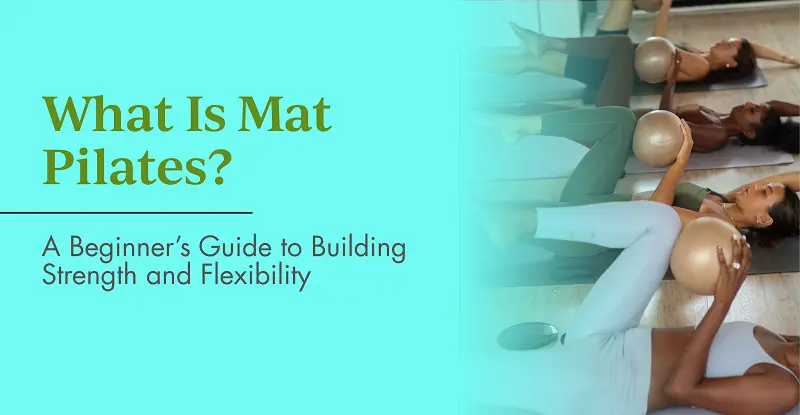
Not every workout needs equipment or a full routine planned out. Sometimes it’s just a mat, a bit of space, and figuring out how your body moves. That’s usually how people come across Mat Pilates.
For anyone still asking ‘What is mat pilates?’, it’s Pilates done on the floor, using your own body weight. No machines stepping in to support you. Which sounds simple, but once you start, you realise it asks for a lot more control than expected. The movements are slow, yes, but they don’t let you switch off.
What Is Mat Pilates and How Is It Different?
If you’ve ever searched ‘What is pilates?’, you’ve probably seen different styles. This is the most stripped-back version.
What you really need is a mat, and you’re all set to do Mat Pilates. Most exercises stay close to the ground, lying down, seated, sometimes shifting positions as the session builds. Nothing feels complicated from the outside.
But because there’s no equipment, the body has to do all the work. That’s where it changes things. You can’t rush through movements or rely on momentum. If something’s off, you feel it straight away.
How Mat Pilates Works
A session doesn’t start intensely. It builds up.
There’s usually a small warm-up. Then a shift into core-focused work. Some mobility, some stretching. It moves, but not in a rushed way.
During Mat Pilates, the focus usually stays on:
- controlled movement, not speed
- gentle but constant core engagement
- breathing that follows the movement
- staying aware of posture throughout
It’s less about counting reps and more about how the body holds itself while moving.
Benefits of Mat Pilates
The changes don’t come all at once. They show up slowly, sometimes without you noticing at first.
1. Builds Core Strength
A lot of pilates mat exercises target the deeper core — not just visible abs, but the muscles that actually support your spine and help you move better day to day.
2. Improves Flexibility
There’s stretching involved, but nothing forced. The body opens up gradually, which makes the flexibility feel more natural.
3. Supports Better Posture
You start catching yourself slouching. Sitting differently. Standing a bit straighter without thinking too much about it.
4. Low-Impact and Accessible
No jumping, no heavy strain. That’s why it works for a wide range of people, especially those easing into fitness.
Mat Pilates for Beginners
Starting can feel a bit strange at first. The movements don’t look difficult, but they don’t always feel easy either.
That’s why mat pilates for beginners usually slows everything down. Breathing, alignment, basic core work, that’s where it begins. There’s space to figure things out without being rushed.
After a few sessions, it starts to click. Movements feel less awkward. The body responds better.
Where to Practise Mat Pilates
A lot of people try it at home first, which is fine. But guidance early on can really help.
Searching for pilates classes in Mumbai usually brings up studios where instructors can guide form and make small corrections. Those small things change how effective the movement feels.
Practicing in a proper setup also makes it easier to stay consistent. You show up, follow the session, and it slowly becomes part of your routine.
Conclusion
So when people ask, ‘What is mat pilates?’, it really comes down to this: it’s a way of building strength and flexibility using your own body, without needing anything extra.
It’s steady. It doesn’t try to overwhelm you. And that’s usually why people stick with it.
If you’re looking to start with the right guidance, sessions at Yasmin Karachiwala Body Image (YKBI) offer a structured way to learn the basics and build from there, at a pace that actually feels manageable.
Ready to begin your pilates journey? Get in touch with us today and let our pilates experts guide you every step of the way.